Aug. 21, 2026
7 Things Offshore Engineers Must Know
FPSO insulation is not like onshore insulation. On a floating production unit, every square metre of bulkhead competes with pipe racks, HVAC risers and process modules — and FPSO insulation must hold its performance through decades of salt spray, constant vibration and thermal cycling, while passing the surveyors of the class society that will certificate the vessel.
Get the FPSO insulation requirements wrong and you are not just buying the wrong product; you are buying rework, delayed sail-away and a dispute with the owner. This guide covers the seven requirements we see most often missed in specifications, tenders and procurement reviews. It is written from the perspective of a manufacturer that has supplied marine insulation since 1995, with marine sandwich panels approved by five major class societies. Read it once, specify once.
FPSO insulation begins with fire ratings: A-60 divisions hold integrity for 60 minutes; B-15 and B-30 cover non-load-bearing cabin divisions
Offshore insulation approval must be verifiable: check class society certificates (DNV, ABS, LR, RS, NK) against the delivered product
Marine insulation in accommodation must also deliver acoustics: target 35–50 dB in cabins, mess rooms and recreation areas
CUI protection means vapour-tight systems: moisture barriers, sealed laps and closed-cell materials where water tightness is critical
FPSO insulation spans -165°C to 650°C and beyond: buy the whole temperature spectrum from one qualified supplier with batch-consistent production
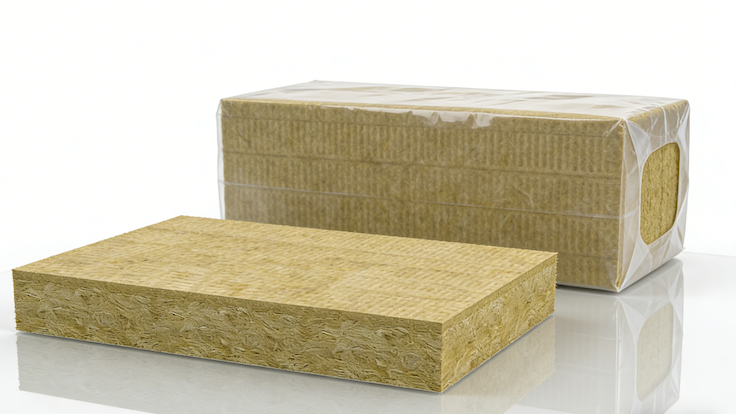
Fire integrity is the backbone of FPSO insulation design, and every FPSO insulation specification should begin with the fire class of each division. It follows the framework of SOLAS Chapter II-2 and the IMO Fire Test Procedures (FTP) Code [1][2]. A-60 is the rating engineers quote most often: the division must retain structural integrity and limit temperature rise for 60 minutes under a standard fire curve. B-15 and B-30 apply to non-load-bearing divisions. The insulation core is what makes or breaks these ratings — which is why non-combustible cores such as rock wool dominate A-class marine panels [3].
One mistake shows up again and again: treating “fire-resistant” as “fire-rated.” A material can be perfectly non-combustible and still fail the 60-minute integrity test if the panel system was never tested as an assembly. Always specify the tested system, and ask for the test report that covers your exact panel construction.
A-0 to A-60: fireproof divisions for accommodation, escape routes and process boundaries
B-15 / B-30: non-load-bearing cabin divisions with shorter integrity times
A-0 / A-1: non-combustible cores for every A-class system
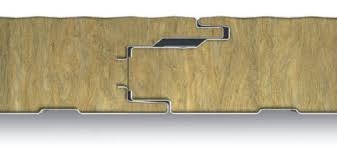
On an FPSO, offshore insulation approval comes from the class society that will issue the unit's classification certificate — commonly DNV, ABS, LR, RS or NK. Approved marine panel systems carry a certificate that states exactly which product, which fire class and which test standard it covers [4][5][6]. For buyers, offshore insulation approval is the single most important document in the package: no marine insulation system should be accepted on site until that certificate has been checked against the delivered goods.
Before purchase, verify three things:
The certificate number resolves in the society's online database
Its scope covers your exact product code and fire class
It remains valid for the project's flag state and class notation
If a supplier cannot show you the certificate file, treat it as a red flag.
Fire protection gets the attention; noise gets the complaints. In accommodation, marine insulation does double duty: it must stop fire and quiet the noise. Crew accommodation on an FPSO must meet the sound levels of the IMO Code on Noise Levels on Board Ships, and in practice this means acoustic performance in the 35–50 dB range across cabins, mess rooms and recreation areas [1][7].
Acoustic performance is driven by the density and thickness of the wool core, not by the face sheets. A 60 kg/m³ rock wool core and a 100 kg/m³ core will not deliver the same sound insulation in the same panel. If the specification quotes only a fire class, ask for the acoustic data sheet too — and for the test method behind it.
Match wool density to the required sound reduction, not to price
Verify acoustic data against the actual panel construction
Remember ceilings and bulkheads: noise travels through both
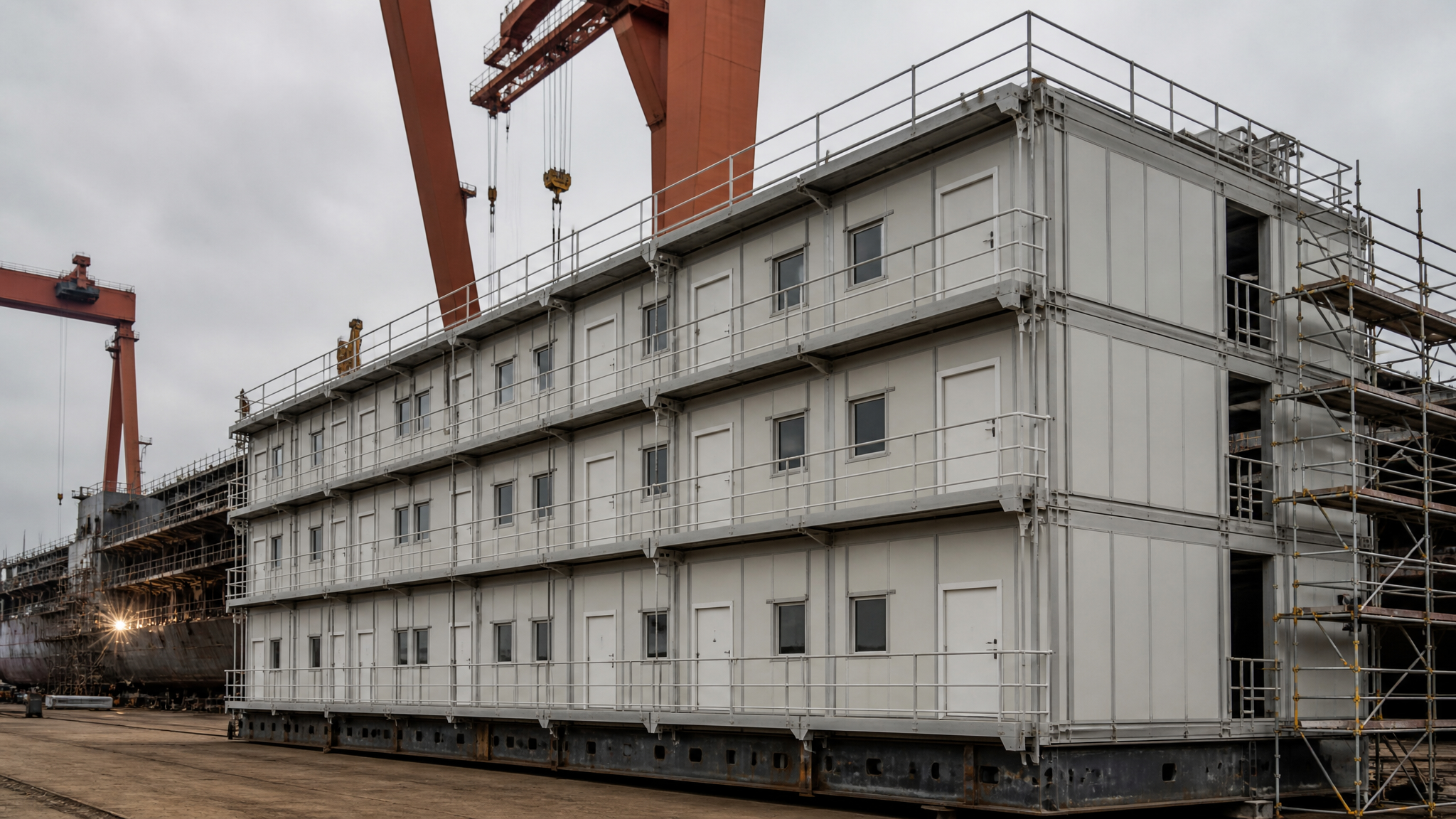
The most common rework we see in shipyards is not the big bulkheads — it is the small details around them. Ducts, cable transits and pipe penetrations that cross an A-60 division must themselves be protected to A-60, and this is exactly where offshore insulation specifications go quiet.
Every penetration through an A-60 division needs an approved firestop, not a gap filled with mastic
HVAC ducts in accommodation must carry fire-rated insulation matched to the duct's fire damper
Inspection hatches and access panels must preserve the rated integrity of the bulkhead
Junctions between panels and marine fire doors must be sealed with approved materials
Joint sealing should use tested sealants and mastics, such as the Foster-type products used in marine outfitting
None of these items is exotic. They fail because they are delegated to site teams without a clear specification. Put them in writing, with product references, and the yard will thank you.
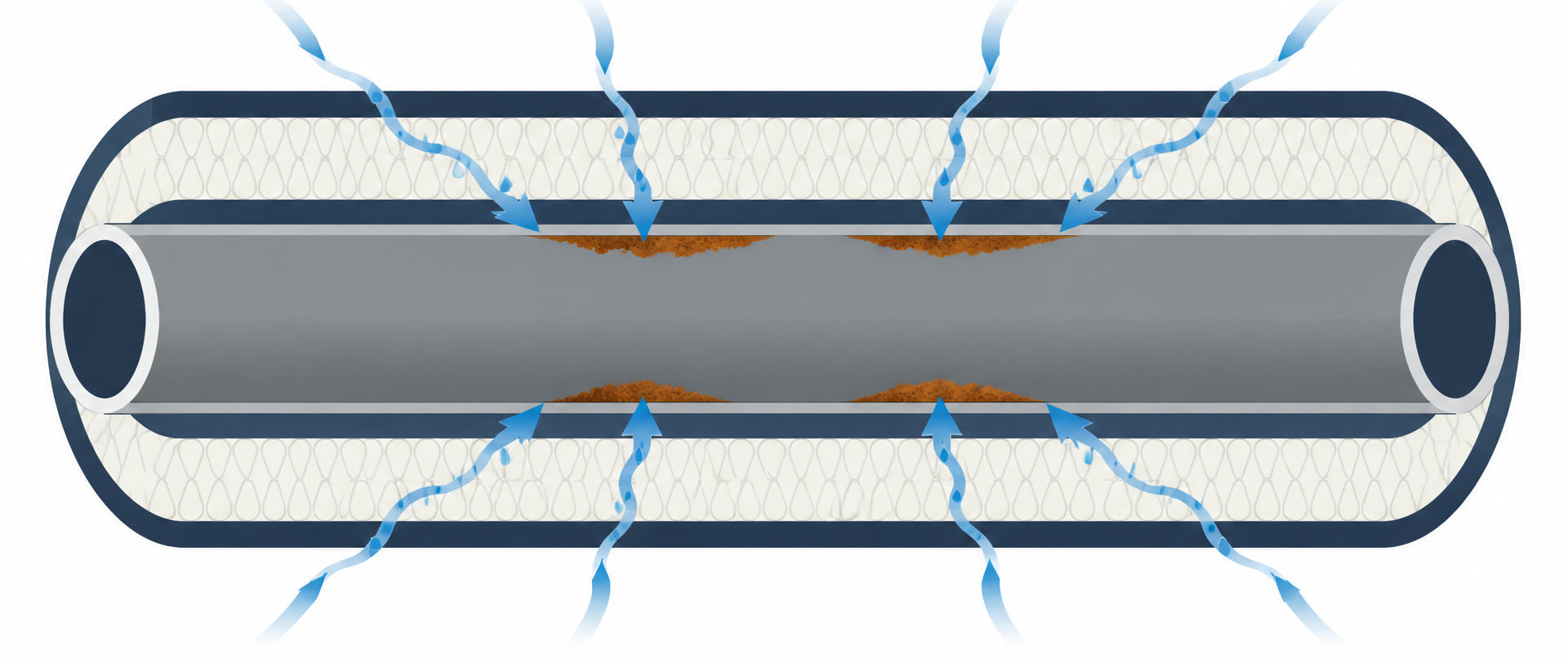
Corrosion under insulation (CUI) is the silent killer of offshore pipework, and FPSO insulation faces the most aggressive CUI environment in the industry. The combination of salt-laden air, condensation and thermal cycling makes CUI more aggressive on a floating unit than almost anywhere onshore. The offshore insulation system is the first line of defence: if moisture reaches the pipe surface, the damage has already started.
Specify moisture barriers on jacketing — PKMB or PSMB laminates for metal cladding
Seal all laps, seams and penetrations with vapour-barrier sealant
Use closed-cell materials (cellular glass, PIR) where water tightness is critical
Waterproof is not enough; the system must be vapour-tight. That distinction — sealed against vapour, not just rain — is what separates a 10-year insulation system from a CUI claim.
FPSO insulation spans a temperature spectrum in one hull. Hot process piping and equipment run up to 650°C; boilers, incinerators and exhausts go beyond 800°C; and an LNG or FLNG process operates at around -165°C. No single material covers that range, so FPSO insulation requirements are never met by one product — they demand a coordinated system.
| Zone | Operating temperature | Typical material | Why |
| Hot process piping and equipment | up to 650˚C | Rock wool pipe and blanket | Dimensional stability at high temperature |
| Boilers, incinerators exhausts | 80-1260˚C | Ceramic fiber blanket | Withstands extreme temperature |
| LNG process, cargo and reliquefaction | around -165˚C | Cellular glass or PIR | Closed-cell, vapour tight, fire-safe |
The efficiency gain comes from buying the whole spectrum from one supplier. For FPSO insulation buyers, one supplier across the temperature spectrum means one quality standard, one testing discipline and one point of contact [9][10].
cellular glass → PIR → rubber foam → rock wool → ceramic fiber

Specification mistakes cost money, but delivery failures cost schedules. On an FPSO project, a late insulation batch stops outfitting, and outfitting delays sail-away. Offshore insulation procurement therefore comes down to three things: batch consistency, inspection and lead time.
Batch consistency: density and thermal conductivity must not drift between batches — ask for batch certificates; for offshore insulation, batch drift is the difference between a passed survey and a rework order
Third-party inspection: accept SGS, BV or equivalent inspection of material and documentation before shipment
Lead time: a 90-day raw-material buffer at the factory absorbs price and supply shocks instead of your schedule
Documentation: certificates, test reports and packing lists must arrive with the goods, not after
In more than thirty years of supplying insulation to energy projects, we have found that the buyers who ask these questions in the tender phase are the ones who sleep at night during commissioning.
FPSO insulation is a system decision, not a product purchase. Fire ratings and class approvals set the legal floor; acoustics, CUI protection and temperature coverage set the performance bar; batch consistency and delivery set the schedule. Specify the tested system, verify the certificates, and choose a supplier with the production scale to back both.
Download our marine insulation datasheets or request class-society certificates — our engineers answer within one business day. [Contact us →]
Related reading
Tel.: +86 131 0203 8097
E-mail: info@hualiinsulation.com
Add.: No.126 Danjiang Road, Tanggu Development Area, Tianjin, China 300451